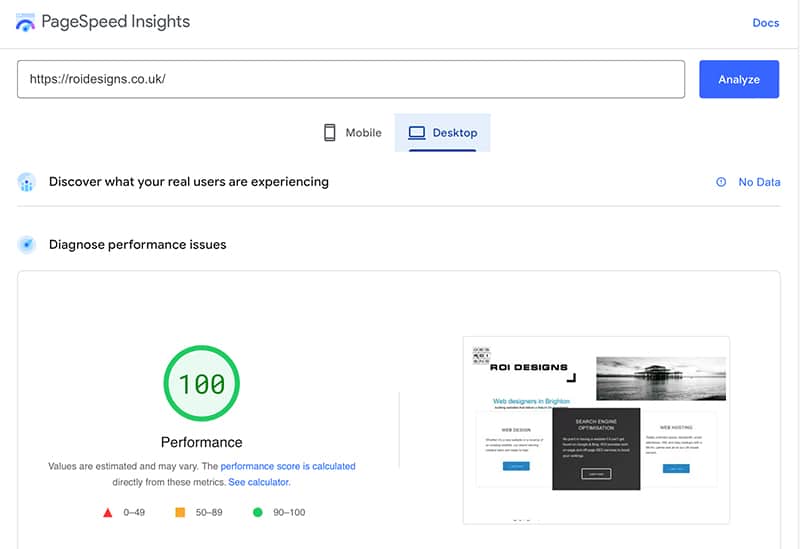
The short answer is yes, page speed does affect SEO.
Page speed is a direct ranking factor, a fact known even better since Google’s Algorithm Speed Update. However, speed can also affect rankings indirectly, by increasing the bounce rate and reducing dwell time.
Website speed is measured by the load time of a page after a visitor clicks on the link on a search engine results page (SERP) – especially now with Core Web Vitals evaluating loading, visual stability and interactivity .
Google has a tool called PageSpeed Insights for measuring loading time, which further endorses the claims that speed is a ranking factor.
These claims also stem from the knowledge that Google aims to serve faster pages that provide a superior visitor experience.
The big G made it very clear that they operate by speed-obsession for every product on the web and Google considers fast load speed as a positive ranking factor.
However, Google has also stated that website owners should not compromise with content quality or relevancy to make web pages faster.
Thus, for websites to rank well on Google, designers and developers must ensure that website pages are optimised enough to load faster. Higher rankings lead to growth in organic traffic, which is very important for all businesses.